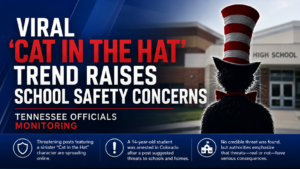
NASHVILLE, TN — A bizarre social media trend involving a sinister version of Dr. Seuss’ “Cat in the Hat” is drawing the attention of school officials and law enforcement agencies across the country — including here in Tennessee.
The trend involves AI-generated or digitally altered images and videos showing a frightening version of the familiar children’s character outside schools, homes and other locations. While many of the posts appear to have begun as fictional or horror-themed content, authorities say some have taken a more troubling turn by naming specific schools, communities or students and including threatening messages.
The Tennessee Office of Homeland Security’s Threat Assessment Center is monitoring the trend and is urging the public to report concerning posts rather than sharing or reposting them. Tennessee officials say threatening content can be reported to local law enforcement, through the SafeTN app or through the state’s suspicious activity reporting system.
The online trend has already resulted in an arrest.
Police in Grand Junction, Colorado, arrested a 14-year-old Grand Junction High School student Monday, August 31, following an investigation into a social media post connected to the trend. According to the Grand Junction Police Department, the post suggested someone associated with the “Cat in the Hat” trend could appear at West Middle School and at random residences.
Police increased their presence at West Middle School and Grand Junction High School while investigators worked with school safety personnel to determine whether the post represented an actual danger. Authorities ultimately determined there was no credible threat to students, staff or the community.
The 14-year-old was taken into custody and charged with interference with staff, faculty or students of educational institutions and harassment. He was later released to his parents.
Similar posts have prompted increased police patrols and investigations in several states. Authorities emphasize that even when a post is intended as a joke or prank, threatening a school, student or community can have serious consequences.
Law enforcement agencies are also discouraging people from reposting threatening images simply to warn others. Sharing the material can cause additional fear, make an investigation more difficult and dramatically increase the reach of a hoax.
Parents are encouraged to talk with their children about the trend and the consequences of creating, sharing or interacting with threatening content online. Students who encounter a post naming their school, another student or their community should save the information and immediately notify a parent, school administrator or law enforcement agency rather than responding to the account themselves.
Authorities say the important distinction is that while many of the images associated with the “Cat in the Hat” trend are fabricated or AI-generated, threats made using those images can still create very real consequences for schools, families and the people responsible for posting them.